
AEO vs GEO vs SEO – What’s the Difference and Which Do You Actually Need?
Here’s the one-sentence version: SEO gets you found in Google’s organic results, AEO gets you selected as the direct answer in AI-powered answer engines, and GEO gets you cited as a source in AI-generated summaries. Each serves a different purpose in the modern search ecosystem—and most businesses need all three.
Quick Navigation
1.The One-Sentence Difference
The search landscape used to be simple: rank high in Google, get clicks, make money. Today, there are three distinct optimization arenas, and they’re not replacing each other—they’re running in parallel.
- SEO gets you found (in Google’s organic results)
- AEO gets you answered (as the direct answer in AI-powered answer engines)
- GEO gets you cited (as a source in AI-generated summaries)
The tricky part? They require different content structures, different authority signals, and different measurement methods. And worse, optimizing for one can occasionally hurt your performance in another if you’re not careful.
The good news: they complement each other more than they compete. Let’s break down each one.
2.What Is SEO? (Quick Refresher)
SEO is the practice of optimizing your website to rank higher in Google’s organic (unpaid) search results. It’s been around for 25+ years and it’s still the foundation of modern search visibility.
Core SEO Focus Areas
- Keyword research and targeting: Understanding what people search for and creating content around those terms
- On-page optimization: Title tags, meta descriptions, heading structure, content quality
- Technical SEO: Site speed, mobile responsiveness, crawlability, indexation
- Link building: Earning backlinks from authoritative domains
- E-E-A-T signals: Experience, Expertise, Authoritativeness, Trustworthiness
The SEO Timeline
SEO is a long game. Expect 3-6 months of consistent effort before you see meaningful ranking movement, and 6-12 months before major positions shift. This is why so many businesses struggle with it—there’s no instant gratification.
SEO is still the largest source of website traffic for most businesses. Even with the rise of AI, 40-60% of traffic for high-performing content sites comes from organic search.
3.What Is AEO? (Answer Engine Optimization)
AEO is the newer kid on the block. It’s the practice of optimizing your content to be selected as the direct answer in AI-powered answer engines—specifically tools like ChatGPT, Claude, Perplexity, and Google’s own AI Overviews.
The critical difference from SEO: you don’t need a click. The user gets their answer directly in the AI interface. Your content provides the value, but the AI engine surfaces it directly without the user visiting your site.
How AEO Works
When you ask an AI answer engine a question, the system:
- Crawls indexed content across the web
- Identifies the most relevant, answer-aligned content
- Extracts or synthesizes an answer
- Displays it with a citation or attribution (sometimes)
Key AEO Signals
- Answer clarity: Does your content directly answer the question asked?
- Structured data: Schema markup (FAQ, HowTo, etc.) helps AI engines understand your content
- Question-answer alignment: Your content format should match how people ask questions
- Conciseness: AEO rewards content that answers directly without fluff
- Content format: Lists, step-by-step guides, definitions, and data summaries perform better
The AEO Timeline
AEO moves fast. Depending on the AI engine’s crawl frequency and the competitiveness of your answer, you can see inclusion in AI answers within 3-30 days of publishing optimized content.
AEO is especially powerful for transactional and informational queries. If someone asks “how to remove carpet stains,” an AEO-optimized answer gets displayed instantly—and your domain gets attributed.
4.What Is GEO? (Generative Engine Optimization)
GEO is even newer than AEO. It’s the practice of optimizing to be cited and referenced in AI-generated summaries and comprehensive answers—the kind that synthesize information from multiple sources rather than pulling a single answer.
The key difference: GEO isn’t about being “the” answer. It’s about being “one of” the authoritative sources. When an AI engine generates a comprehensive overview or summary, your content gets cited as supporting evidence.
How GEO Works
AI generative engines like perplexity, Claude, or advanced versions of ChatGPT work by:
- Retrieving relevant content from multiple sources
- Analyzing semantic relationships and topical depth
- Synthesizing a new summary/perspective
- Citing and attributing sources that informed the answer
Key GEO Signals
- Semantic depth: How comprehensively do you cover your topic?
- E-E-A-T signals: Experience, expertise, authoritativeness, and trustworthiness matter even more here
- Topical authority: Do you own your niche across multiple related topics?
- Multimodal content: Text, images, data, and video all signal authority
- Original research or data: Original insights, studies, and proprietary data get cited heavily
The GEO Timeline
GEO is a longer play than AEO. Building the kind of topical authority and E-E-A-T required to be consistently cited in AI summaries takes months to years. It’s similar to SEO’s timeline, but with different signal priorities.
GEO can generate “referred traffic” from AI citations. Even if a user doesn’t click through, seeing your domain repeatedly as a cited source builds brand awareness and can drive eventual visits.
5.The Master Comparison Table
Here’s where SEO, AEO, and GEO differ across the dimensions that actually matter:
| Dimension | SEO | AEO | GEO |
|---|---|---|---|
| Primary Goal | Rank #1-10 in organic results | Be THE answer displayed | Be cited as a source |
| Primary Platforms | Google, Bing | ChatGPT, Claude, Perplexity, Google AI Overviews | ChatGPT, Claude, Perplexity, custom GPT apps |
| Core Metric | Organic clicks & traffic | Answer displays (impressions) | Source citations & referred traffic |
| Key Content Format | Long-form, keyword-rich, link-worthy | Direct answers, lists, step-by-step, FAQs | Comprehensive guides, original research, multimodal |
| Critical Signals | Backlinks, RankBrain, relevance, E-E-A-T | Answer clarity, schema markup, question-match | Topical depth, authority, E-E-A-T, citations |
| Timeline to Results | 3-12 months | 1-4 weeks | 2-6 months |
| Typical Cost | $$$ (ongoing) | $ (content restructuring) | $$$ (authority building) |
| Best For | Long-tail keywords, discovery, high-intent buyers | Quick answers, comparison questions, how-tos | Thought leadership, complex topics, brand authority |
| KPI Example | 10K monthly organic visits | 50 answer displays in ChatGPT/week | 15 citations in Perplexity summaries/week |
| Risk of Ignoring | Lose 40-60% of web traffic long-term | Users get answers from competitors instead | Lose brand visibility in AI summaries |
6.When Do You Need Each One?
The honest answer: most businesses need all three. But let’s be realistic—you might not have the resources to fully optimize for all three simultaneously. Here’s how to prioritize based on your business type:
Ecommerce (Product-based)
Priority: SEO + AEO
Why? Product queries are transactional. Users search for specific products and want quick comparisons. SEO gets you ranking for product keywords, and AEO helps you appear in “best for [use case]” answers.
- Focus on product comparison pages and detailed specifications
- Use schema markup for product data (price, rating, availability)
- Create answer-focused FAQ sections for common product questions
B2B SaaS
Priority: SEO + GEO (with AEO as a secondary focus)
Why? SaaS buyers are research-heavy. They read whitepapers, case studies, and vendor comparisons. You need SEO for discovery and GEO for citations in research summaries. AEO helps with how-to and integration questions.
- Publish original research, benchmarks, and industry reports
- Build topical authority across problem statements and solutions
- Optimize product documentation for AEO answers
Local Business
Priority: SEO + AEO
Why? Local businesses benefit from SEO’s local pack rankings and AEO’s “where near me” answers. GEO matters less unless you’re trying to build regional authority.
- Optimize for Google Business Profile and local keywords
- Answer common local questions directly (hours, services, pricing)
- Use location schema markup
Content/Media Publisher
Priority: GEO + AEO (with strong SEO foundation)
Why? Publishers live and die by citations and referred traffic. GEO gets your content cited as a source, and AEO gets direct answer attribution. Both drive awareness and traffic.
- Focus on original research, interviews, and proprietary data
- Build semantic depth across topic areas
- Structure articles as standalone answers and comprehensive guides
🎯 CASE STUDY: CWSPIRITS — ALL THREE WORKING TOGETHER
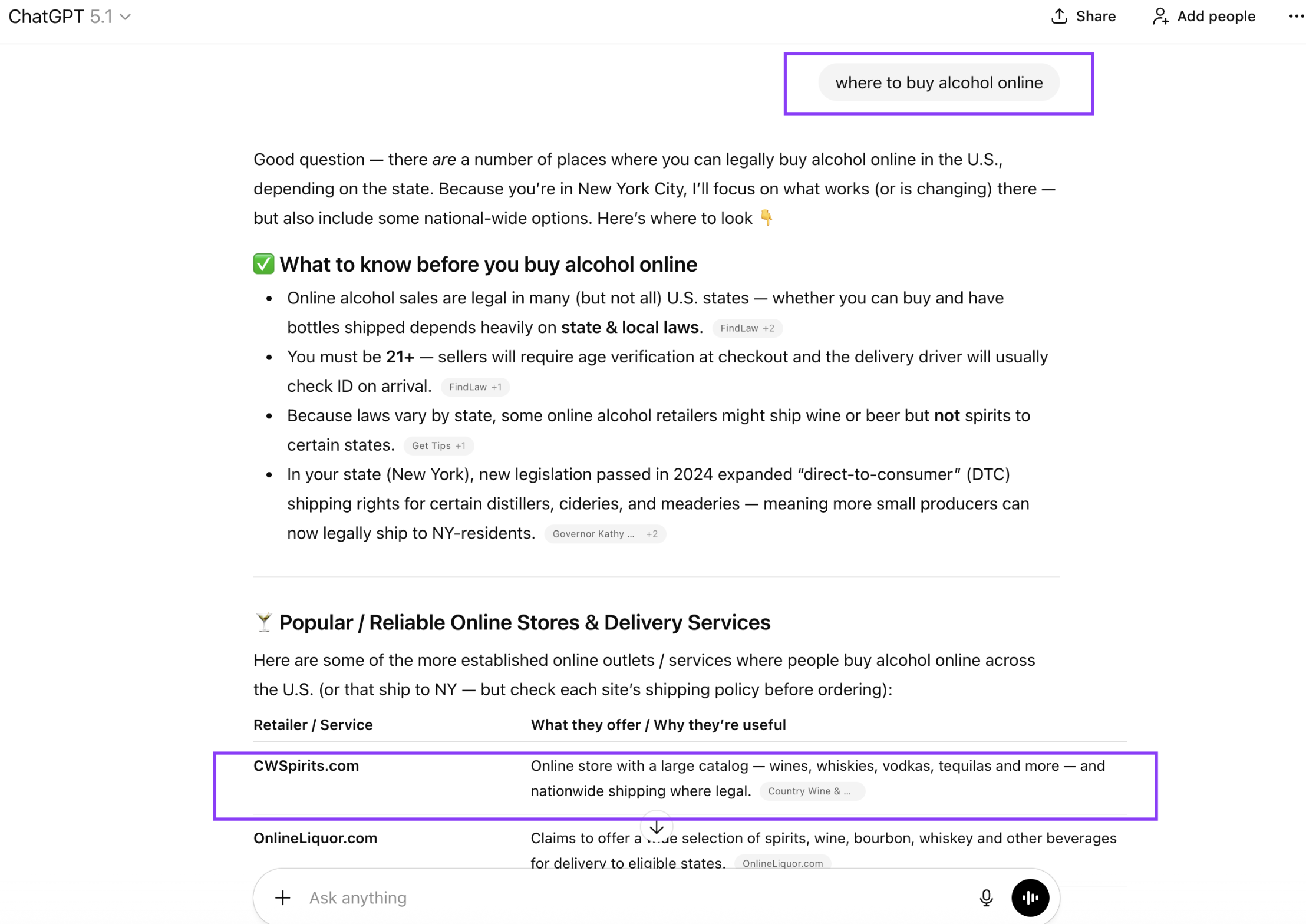
SEO Foundation + GEO + AEO Results: 79,215 organic keywords, 156,698 monthly traffic (+316% YoY), $5.7M traffic value. Traditional SEO powered 2,441 top-3 rankings. GEO success: ChatGPT cites CWSpirits FIRST for “where to buy alcohol online.” AEO expansion: Multiple AI Overview appearances for commercial queries like “bourbon” (position 3). This unified strategy shows that ranking (SEO) + citation (GEO) + answer attribution (AEO) create compounding visibility across all search channels.
Service Agency or Consultancy
Priority: All three (SEO + AEO + GEO)
Why? Agencies need to demonstrate thought leadership across multiple channels. You need SEO for service page rankings, AEO for quick methodology answers, and GEO for being cited as an expert source.
- Build topical authority across your service areas
- Create answer-driven content (methodologies, frameworks, templates)
- Publish case studies and original research to build citations
7.How They Work Together (The Modern Search Stack)
Here’s the truth: SEO, AEO, and GEO aren’t competing strategies. They’re layers of a modern search optimization stack. Understanding how they overlap is key to prioritizing your effort.
The Foundation: SEO
SEO is your foundation. To be cited in GEO or displayed in AEO, your content first needs to be crawlable and indexable. If your site has technical SEO problems, you won’t rank in search engines—and you definitely won’t be selected by AI engines.
- Technical SEO (site speed, mobile responsiveness, crawlability)
- Content quality and keyword relevance
- Backlinks and domain authority
The Content Layer: AEO
AEO sits on top of SEO’s foundation. It’s about restructuring and formatting the content you’ve already optimized for Google to also be selected by AI engines. This doesn’t require new content—it requires smarter content structure.
- Answer-first content formatting
- Schema markup (FAQ, HowTo, etc.)
- Question-answer alignment
The Authority Layer: GEO
GEO sits on top of both. It’s about deepening and expanding your topical authority so that your content gets cited frequently in AI summaries. This requires:
- Comprehensive topic coverage (interconnected content)
- Original data, research, and unique insights
- Multimodal content (text, images, video, interactive tools)
- Strong E-E-A-T signals
✓ LITTLE WEST: RANKINGS + CITATIONS + AI VISIBILITY
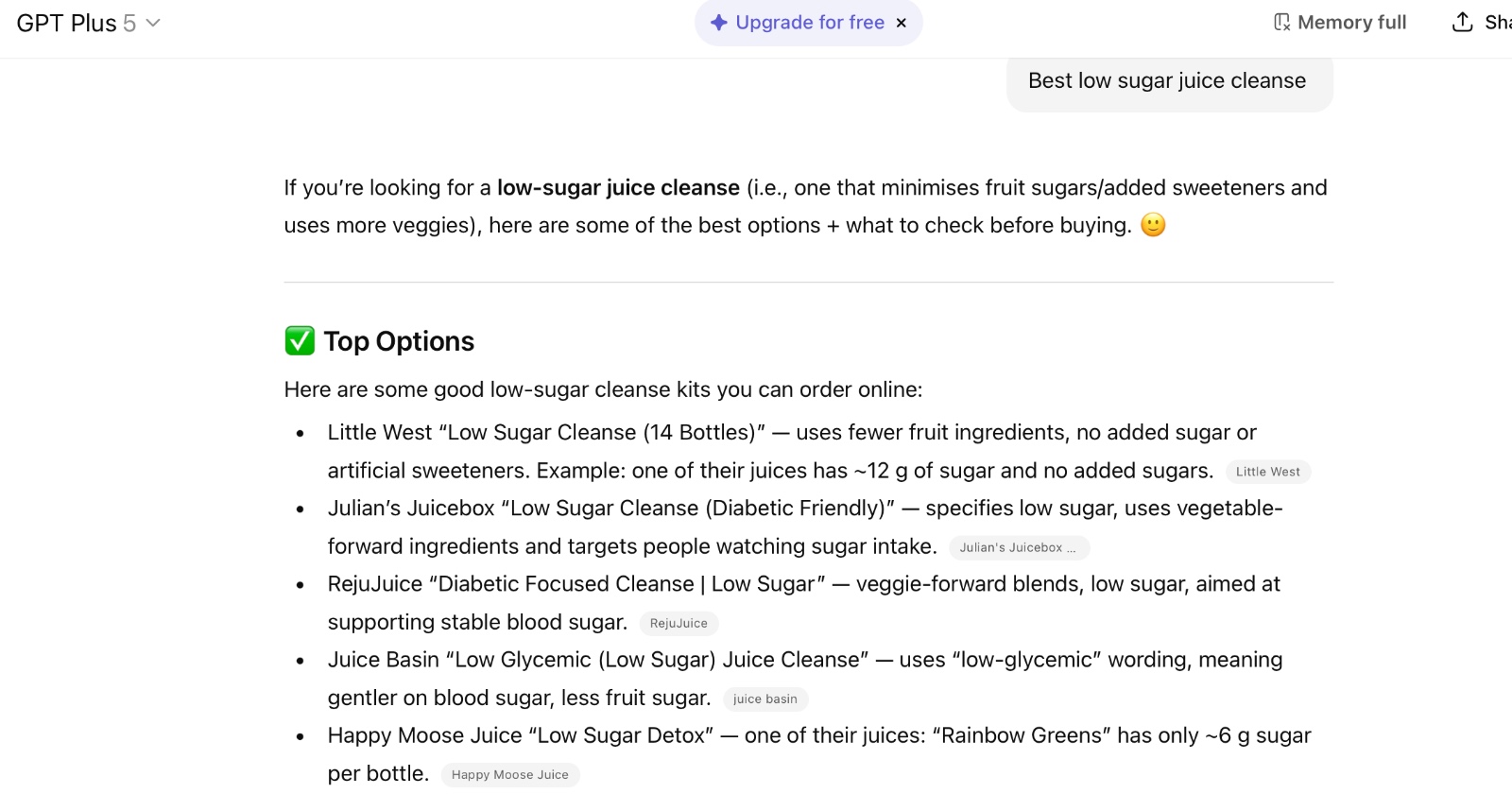
The Pyramid in Action: Little West shows all three layers working together. SEO foundation: #1 rankings for “low sugar juice cleanse,” “what to eat after a juice cleanse,” “best fruit juice for energy.” AEO layer: Answer-first blog content with FAQ schema capturing featured snippets. GEO peak: Cited by ChatGPT across 4 different commercial queries as the authoritative juice cleanse brand. Result: 6,991 keywords ranking, 4,128 monthly traffic, $171,852 traffic value — all feeding into AI citations that build brand authority.
8.Common Mistakes When Choosing Between Them
Mistake #1: “We only need one”
The biggest error. Businesses often think they can choose one and skip the others. Reality: they serve different audiences and search contexts. A user might:
- Find you via SEO (clicking from Google)
- Get your answer via AEO (without clicking)
- See you cited in GEO (building brand awareness)
All three are happening in parallel.
Mistake #2: “GEO doesn’t matter because we rank #1”
Ranking #1 in Google doesn’t guarantee you’ll be cited in AI summaries. GEO signals (topical depth, original research, multimodal content) are different from SEO signals. You can rank #1 and still not be cited frequently.
Mistake #3: “AEO hurts our click-through rate”
Yes, if your content is selected as THE answer in an AI engine, some users won’t click through. But this is true of Google’s featured snippets and People Also Ask, and nobody avoids ranking there. The tradeoff is worth it because:
- You get brand visibility in answers (even without clicks)
- Users who don’t get their full answer still click
- It’s often your competitors instead if you don’t optimize
Mistake #4: “We can’t measure GEO”
You can. Tools like Semrush, Ahrefs, and specialized platforms like Origin.pro now track AI citations and mentions. You won’t have the same volume of data as Google Analytics, but you can measure trends and impact.
9.Your Action Plan: Which to Start With
Here’s a framework to decide where to start based on your current state:
| Your Current State | Start Here | Then Move To |
|---|---|---|
| Weak organic visibility | SEO | AEO once you rank #1-5 |
| Strong rankings, low conversion | AEO | GEO for brand authority |
| Good rankings, want cited authority | GEO | AEO for quick wins |
| Content-heavy industry (SaaS, publishing) | SEO foundation | GEO + AEO in parallel |
| E-commerce (product-focused) | SEO for discovery | AEO for comparison queries |
Quick-Start Checklist
Use this to get started immediately:
- Week 1 (SEO): Audit technical SEO, identify keyword gaps, prioritize top content
- Week 2 (AEO): Identify top 20 answer-friendly queries, restructure 5 pages with answer-first formatting
- Week 3 (GEO): Map topical authority gaps, plan original research or expanded guides
- Week 4+: Scale winners across your content library