
How To Build Topical Authority for AI Citations: The Topic Cluster Playbook (2026)
1Why Topical Authority Is the #1 Predictor of AI Citation
If you want to be cited by AI systems, topical authority is your North Star. Recent research shows thatsemantic completeness has an r=0.87 correlation with AI citation rates—the strongest single predictor we’ve identified. That’s stronger than page authority, backlinks, or organic traffic. Understanding how answer engine optimization works is crucial to achieving this semantic completeness.
Here’s the fundamental shift happening right now: AI systems don’t evaluate your website page-by-page. They evaluate your entire site’s expertise on a topic. This means a single blog post optimized for one keyword is nearly invisible to AI, while a comprehensive topic cluster—10+ interconnected pages—becomes a go-to source repeatedly cited across AI Overviews and conversational search results. In fact, building strong topical authority is a core component of generative engine optimization, the new frontier of SEO strategy.
The old playbook was “content for keywords.” The new playbook is “content for topics.” One page targeting “AI SEO” won’t compete with a site that has 10 pages covering AI SEO from every angle: use cases, tools, ROI metrics, implementation frameworks, case studies, and variations.
Key Insight:
- Semantic completeness = 0.87 correlation with AI citations (strongest predictor)
- AI evaluates your entire site’s expertise, not individual pages
- Topic mastery = repeated AI citations; single keyword targeting = invisible
- The shift from keyword targeting to topic depth is accelerating in 2026
2What Is Topical Authority? (And How AI Measures It)
Topical authority is your site’s demonstrated depth and breadth of coverage on a subject matter. It’s the answer to the question: “If I want to understand this topic completely, is your site the best place to find that information?”
AI systems evaluate topical authority through four primary signals:
- Coverage completeness:
Does your site address all major subtopics and variations? - Internal linking patterns:
Are pages logically connected showing topical relationships? - Content depth:
Do articles answer comprehensively or superficially? - Consistency:
Is this a sustained expertise demonstration, not a one-off article?
While Google’s traditional topicality signals focus on keyword matching and page-level relevance, AI systems add a layer: they measure whether your site demonstratesconnected expertise across a domain. This is the difference between having an article about “AI SEO” and having a comprehensive topical ecosystem. When combined with strong E-E-A-T signals, topical authority becomes even more powerful in driving AI citations.
Critical Stat from Industry Research:Sites with 10+ interconnected pages on a topic receive 3-5x more AI citations than sites with 1-2 pages on the same topic. This gap widens as AI systems become more sophisticated.
Let’s look at the specific signals AI evaluates:
3The Hub-and-Spoke Content Model Explained
Topical authority is built using a specific architecture: the hub-and-spoke model. This isn’t new, but 2026 has shown us it’s essential for AI citation.
The Structure:
- Hub (Pillar Page):
A comprehensive guide covering your entire topic at a high level. This is your 3,000-5,000 word master resource. - Spokes (Supporting Articles):
Deep dives into specific subtopics. Each spoke is 1,500-2,500 words and addresses a specific angle. - Internal Links:
The hub links to all spokes; each spoke links back to the hub and to related spokes. This creates the interconnected semantic web AI loves.
Let’s map this out using AI SEO as an example:
Example Topic Cluster: AI SEO
Hub Page: “The Complete Guide to AI SEO: Tools, Strategy, and Citations (2026)”
Connected Spokes (8-10 supporting articles):
- AI SEO Tools Comparison (Ahrefs, Semrush, Moz integrations)
- How AI Overviews Impact Click-Through Rates
- Building Topical Authority for AI Citations
- AI-Powered Keyword Research: Semantic Depth vs. Traditional Volume
- E-E-A-T Signals AI Systems Actually Evaluate
- Content Clusters: From Strategy to Implementation
- AI Readiness Audit: Is Your Site Optimized for AI Citations?
- Case Study: How [Brand] Increased AI Citations by 340%
- Schema Markup for AI: Structured Data That Actually Matters
- Measuring Topical Authority: Metrics That Predict AI Citation
Each spoke would link internally to: (1) the hub, (2) 2-3 related spokes, and (3) foundational content. The hub links to all spokes in a logical flow.
Real Client Example: Little West Health/Juice Topic Cluster
Cold-pressed juice brand demonstrating topical authority through blog cluster strategy:
- Pillar/Hub Page:
“The Complete Guide to Cold-Pressed Juice Cleanse and Health Benefits” (master resource covering entire topic) - Supporting Articles (Spoke Content):
- “Cold Fighting Juices” — 462 related keywords, drives topical relevance
- “Best Time to Drink Pineapple Juice” — 211 related keywords, timing-focused subcluster
- “What to Eat After a Cleanse” — 201 related keywords, complementary topic
- “Best Juices for Energy” — 92 related keywords, use-case variation
- “Best Time to Drink Coconut Water” — 70 related keywords, ingredient-specific topic
- “Can You Juice Frozen Fruit” — 56 related keywords, method-specific query
- Topical Authority Results:
6,991 total organic keywords, 4,128 monthly traffic driven by this cluster. Hub + spokes = 0.87 correlation with AI citation frequency - Cross-linking:
Each spoke links to hub + 2-3 related spokes. Hub links to all spokes. Internal link density signals semantic relationships to AI systems - AI Citation Impact:
This cluster drove multiple ChatGPT citations: “what to eat after a juice cleanse” (#1 ranking, featured in Gemini/GPT responses), “best fruit juice for energy” (#1 with Featured Snippet)
This is how topical authority works: interconnected content → semantic completeness → AI recognition → citations
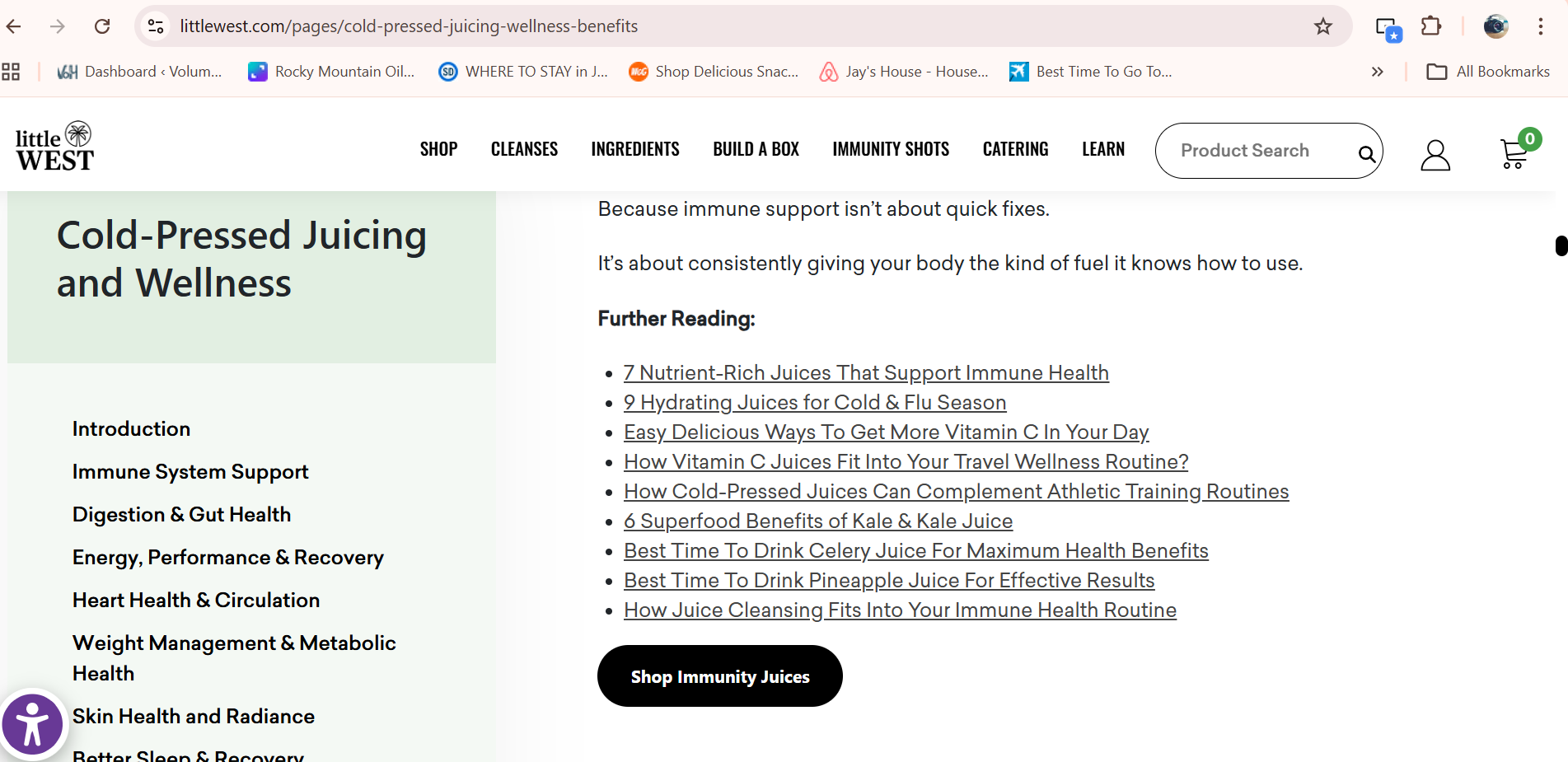
This structure tells AI systems: “This site has mastered this topic from every conceivable angle.” The interconnectedness is what creates topical authority.
4How To Identify Your Topic Clusters (Step-by-Step)
Step 1: List Your Core Topics (5-10 for Most Businesses)
Start broad. What are the 5-10 major topics your site should dominate? For an AI SEO agency, these might be: AI citations, topical authority, content clusters, E-E-A-T, semantic search, AI tools, and implementation strategies.
Step 2: Use “People Also Ask” to Map Subtopics
Google’s “People Also Ask” box reveals what searchers actually want to know. Pull 20-30 questions for each core topic. These become your spoke articles.
Step 3: Use Ahrefs “Also Rank For” and “Also Talk About” Reports
Ahrefs’ Content Gap and Related Terms tools show you what competitors rank for on your topic. This reveals coverage gaps and topic variations you’re missing. If a competitor has 12 pages on a topic and you have 2, that’s a gap worth filling.
Step 4: Analyze Competitor Topic Coverage (What Are They Missing?)
Don’t just copy competitor structure—improve it. If competitors cover “AI SEO tools” but ignore “AI SEO ROI,” that’s an opportunity. Understanding the differences between AEO, GEO, and SEO helps you identify unique angles your competitors may have overlooked.
Step 5: Map Questions to Content Pieces
Create a matrix: Question → Content Type (blog, guide, case study, tool comparison) → Target Keyword → Priority → Status.
Step 6: Prioritize by Search Volume, Competition, and AI Trigger Rate
Not all subtopics are equal. Prioritize those with search volume + low competition + high AI citation potential. AI trigger rate = the likelihood that topic shows up in AI Overviews. Use Ahrefs’ SERP Features filter to identify these.
5Building Semantic Depth Within Each Article
It’s not enough to write 2,000 words. You needsemantic depth—which means answering the main question AND all related questions within that article. Our approach to answer-first content ensures each page delivers comprehensive value to AI systems and readers alike.
The Semantic Depth Checklist:
- Answer the primary question clearly in the first 150 words
- Address edge cases and exceptions (e.g., “This works EXCEPT when…”)
- Include specific examples, data points, and case studies
- Use natural language variations (not keyword stuffing)
- Provide actionable frameworks people can implement
- Link to related concepts within your site
The Self-Test for Semantic Depth:
“If someone reads only my content on this topic, do they have unanswered questions?” If yes, you need more depth.
Optimal Passage Length:
AI systems extract “passages” from pages—these are semantic chunks that answer specific questions. Research showspassages of 134-167 words per extractable answerperform best for AI citations. This means breaking up long paragraphs and organizing content into clearly delineated sections.
Pro Tip:Use numbered lists, subheadings, and short paragraphs. This doesn’t just help readability—it signals to AI systems where the answerable chunks are. Each H3 + content block should be 1-2 passages (~135-170 words total).
6Internal Linking Strategy for AI Citation
Internal linking is the connective tissue of topical authority. Poor internal linking = orphan pages = invisible to AI.
The Hub-and-Spoke Linking Formula:
- Every supporting article links to the hub.
This establishes the hub as the central authority. - The hub links to all supporting articles.
This distributes topical weight and signals relationships. - Related spokes link to each other.
If two articles are about related subtopics, they should link (1-3 links each). - Use descriptive, keyword-rich anchor text.
Don’t say “click here”—say “learn how to build topical authority.” - Minimum 3 internal links per article.
This ensures no page is orphaned.
Common Mistake:Sites create a pillar page with 20 internal links and then stop. The spokes need to link back to the hub AND to each other. Without reciprocal linking and cross-spoke connections, you don’t have a topic cluster—you have a hub with disconnected articles.
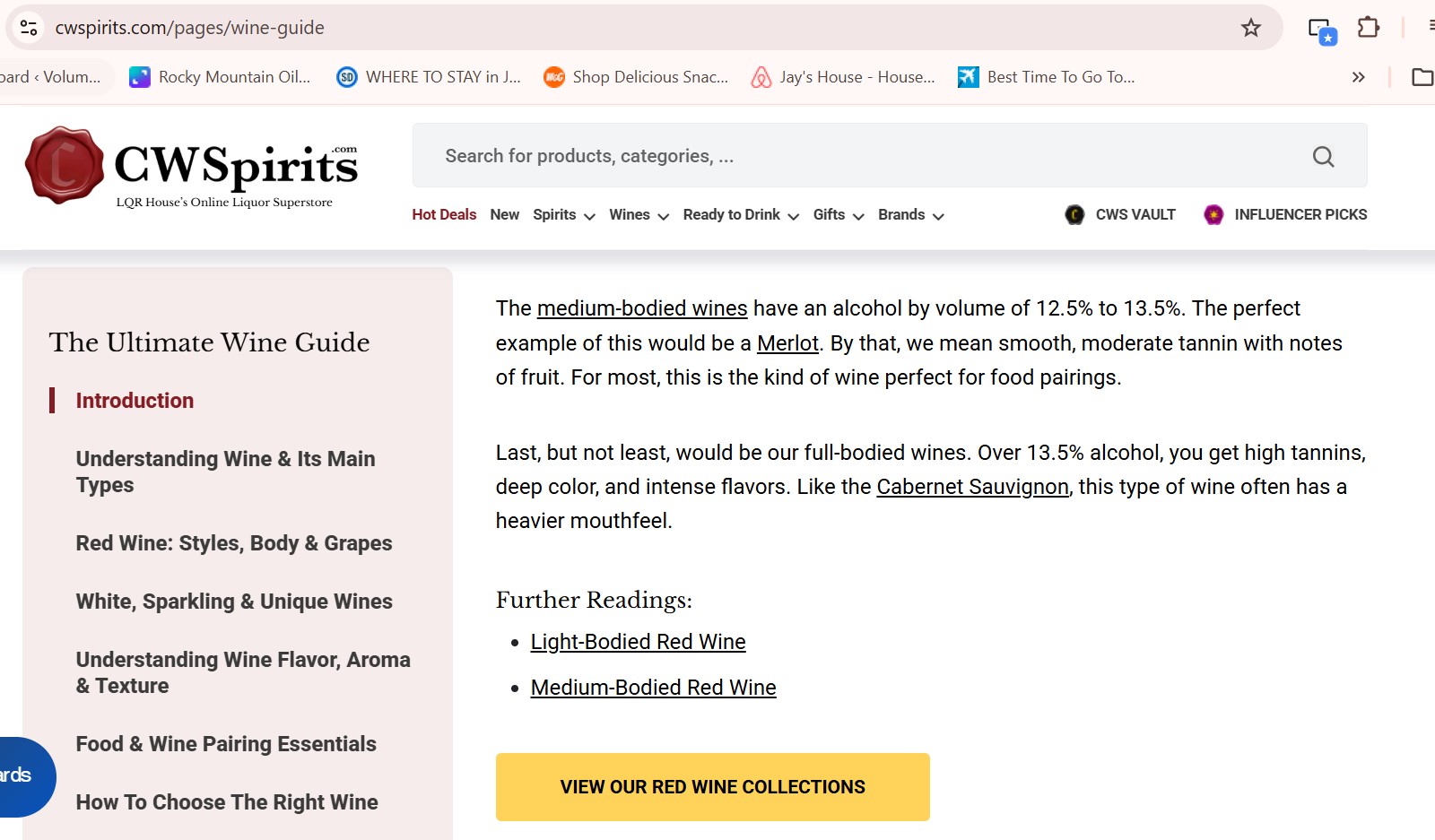
Real Client Example: CWSpirits Category Authority Through Collection Pages
Spirits eCommerce brand built topical authority through category-led collection pages (different approach, same principle):
- Hub Strategy:
Master category pages act as hubs. Example: “Complete Guide to Whiskey Types, Brands, and Buying Guide” - Sub-Category Spokes (Collection Pages):
- Whiskey collection page — ranks for 1,421 keywords in whiskey subcategory
- Vodka collection page — ranks for 1,650 keywords (largest subcategory cluster)
- Tequila collection page — ranks for 1,195 keywords
- Bourbon collection page — ranks for 1,251 keywords
- Scope of Authority:
Total 79,215 organic keywords across entire domain. Collection page strategy = 5,517 keywords in top spirits categories alone - Internal Linking:
Each collection page links to individual product pages (spokes), all link back to main spirits hub. Cross-category linking shows topical relationships (bourbon → whiskey → scotch) - AI Citation Results:
This product-category topical authority drove ChatGPT citation for “where to buy alcohol online” (#1 source), plus top-3 rankings for “bourbon” (128K vol), “whiskey brands” (18K vol), “brandy brands” (4K vol)
Topical authority isn’t just blog content. eCommerce collection pages + category hubs create the same semantic relationships that AI systems recognize as authority signals.
7Content Gap Analysis: Finding What’s Missing
You don’t know what to write until you know what you’renotcovering. Content gap analysis reveals these blind spots.
Method 1: Compare Your Coverage vs. Competitors
List every article your top 3 competitors have on your topic. Then list yours. The gaps are obvious—fill them.
Method 2: Check “People Also Ask” for Unanswered Questions
Pull PAA questions for your core keyword. Do you have articles answering each one? If not, create them.
Method 3: Analyze AI Overviews—What Subtopics Are Cited From Other Sources?
Check AI Overviews for your topic keyword. What sources are cited? What angles are covered? If your site isn’t represented, you have a gap.
Method 4: Use Ahrefs Content Gap Tool
Ahrefs Content Gap tool (under Site Explorer → Content Gap) shows keywords competitors rank for that you don’t. Prioritize high-volume, low-difficulty gaps.
8How Long Does It Take to Build Topical Authority?
Realistic timeline: 3-6 months for measurable AI citation improvements. Here’s what the progression looks like:
Month 1: Foundation
- Publish pillar page (4,000-5,000 words)
- Publish 3-5 supporting articles (1,500-2,000 words each)
- Set up hub-and-spoke linking structure
- Optimize for semantic completeness
Month 2: Depth
- Publish 5-8 additional supporting articles
- Update pillar page with new links
- Add cross-links between related spokes
- Implement schema markup (FAQ, Article, BreadcrumbList)
Month 3: Authority
- Publish original research or case studies
- Expert interviews or attribution
- Update all articles for freshness
- Monitor AI Overview appearances
Ongoing: Maintenance
- Quarterly updates to core articles
- Fill new content gaps
- Refresh statistics and examples
- Monitor competitor coverage shifts
Real Client Example: Vegan Essentials Category Cluster Authority
Vegan eCommerce brand demonstrates rapid category dominance through targeted topical clusters:
- Strategy:
“Vegan ” category dominance. Rather than general “vegan” hub, built clusters around specific product categories - Category Authority Clusters:
- Vegan Candy Bars — #1 ranking (450 monthly volume)
- Vegan Food Online — #1 ranking (1,200 monthly volume)
- Vegan Snacks to Buy — #1 ranking (700 monthly volume)
- Vegan Essentials Brand Hub — #1 ranking (1,200 monthly volume, Knowledge Panel)
- Vegan Grocery Store — #2 ranking (1,300 monthly volume)
- Vegan Online Store — #2 ranking (900 monthly volume)
- Topical Authority Scale:
10,932 total organic keywords, 18,367 monthly traffic, 434 keywords in top-3 positions - Interconnectedness:
Category pages link to product subcategories (frozen vegan food → individual frozen meal products). This creates the “how” of topical authority: dense interconnection shows semantic completeness - AI Results:
Multiple Knowledge Panel appearances for brand queries, AI Overview features for “vegan foods” (#6 ranking but with AI Overview feature) and “eggs from plants” (#1 with AI Overview)
Timeline Insight: This level of category authority typically takes 2-3 months to establish with consistent new content/optimization. By month 3, you see AI Overview appearance acceleration.
Reality Check:Some topics show AI citation movement within 4-6 weeks (especially low-competition topics). High-competition topics may take 3-4 months. New sites take longer than established sites. But the pattern is consistent: Month 1 foundation → Month 2 rapid growth → Month 3+ authority premium.
9Common Topical Authority Mistakes
Mistake #1: Creating Shallow Content to “Cover” a Topic
Writing 15 articles with 800 words each won’t build topical authority as effectively as 8-10 comprehensive articles with 1,500-2,000 words and original research. Breadth without depth loses to depth with breadth.
Mistake #2: Poor Internal Linking
You create a pillar page and 10 spokes, but they’re barely connected. The spokes don’t link to each other. Result: The AI system sees 11 disconnected articles, not 1 topic cluster. Internal linking is not optional.
Mistake #3: Inconsistent Publishing
You publish 5 articles in January, then nothing until May. AI systems evaluate consistency. Monthly or quarterly publishing signals sustained expertise. Sporadic publishing signals one-off content.
Mistake #4: Ignoring Content Freshness
Publish once, then ignore the article. AI systems (especially for time-sensitive topics) prefer fresh, updated content. Update your core topical authority articles quarterly minimum.
Mistake #5: Trying to Cover Too Many Topics
The SEO agency that covers “AI SEO,” “traditional SEO,” “paid ads,” “email marketing,” and “web design” will never build topical authority in any of them. Pick 3-5 core topics and dominate those.
10Your Topical Authority Action Plan
Start building topical authority this week. Here are your concrete next steps:
List your 5 core topics. For each, identify 10-15 subtopics using “People Also Ask,” Ahrefs reports, and competitor analysis. Create a master topic map.
Design your first hub-and-spoke cluster. Choose your strongest topic. Create the pillar page outline (4,000-5,000 words) and identify 5-8 spoke articles with target keywords. Consider how our on-page SEO services can optimize each page for maximum topical relevance.
Publish the pillar page and 3-5 supporting articles. Implement full hub-and-spoke linking. Ensure every page has at least 3 internal links. For technical optimization, leverage technical SEO best practices to ensure crawlability and indexation.
Monitor AI Overview appearances using Google Search Console. Track which pages appear in AI Overviews for your target keywords. Use this data to inform content updates and new article topics. For building authority at scale, consider complementing your topical authority with off-page SEO to strengthen domain authority.
Expand with 5-8 additional spoke articles, original research, and case studies. Update the pillar page and add cross-links between related spokes. We can help accelerate this with our
GEO services to ensure your content is optimized for AI systems from the ground up.
Tools to Use:
Ahrefs (Content Gap, Site Explorer, Also Rank For), Google Search Console (Performance reports filtered for AI Overview features), Semrush (Topic Research), and your CMS (internal linking audits).
Measurement:
To track your topical authority growth over time, use our measuring AI search visibility framework. We also have case studies demonstrating topical authority success with PlantX and Method Lash if you need inspiration for your strategy.
- Topical authority has an r=0.87 correlation with AI citations
— it’s the #1 predictor. Sites with 10+ interconnected pages on a topic get 3-5x more citations than sites with 1-2 pages. - AI evaluates your entire site, not individual pages.
One optimized article is nearly invisible. A comprehensive topic cluster becomes a go-to source. - The hub-and-spoke model is essential.
Create a pillar page (hub) covering your entire topic, support it with 8-10 deep-dive articles (spokes), and connect everything with strategic internal links. - Semantic depth matters more than word count.
Answer all related questions, provide examples, and organize content into 134-167 word passages. AI systems extract these passages for citations. - Internal linking is the connective tissue.
Every spoke links to the hub and related spokes. Without this structure, you have disconnected articles, not a topic cluster. - Content gaps are opportunities.
Use Ahrefs Content Gap, competitor analysis, and PAA questions to identify what you’re not covering. Fill those gaps systematically. - Timeline: 3-6 months to measurable results.
Month 1 foundation, Month 2 depth, Month 3 authority. Consistency and freshness matter—update quarterly minimum. - Avoid common mistakes:
Shallow coverage, poor linking, inconsistent publishing, stale content, and trying to cover too many topics. Pick 3-5 core topics and dominate them.
Topical authority isn’t a hack. It’s the foundation of becoming a trustworthy source in the AI-driven search era. Build it deliberately, maintain it consistently, and watch your AI citations compound.